


Type: Hybrid (F1)
Relative Days: 50 - 55
Plant Habit: Monoecious (Mono)
Typical Use: Slicer (Fresh Eating)
Size: 8 - 9"
Color: Dark Green
Life Cycle: Annual
Characteristics:
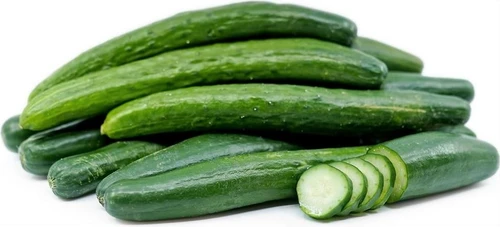
TSX-CU237JP F1 Cucumber is a vigorous Japanese-type hybrid that combines excellent flavor and crisp texture with a forgiving harvest window. Maturing in approximately 50 to 55 days, monoecious plants produce slender, dark green fruit approximately 8 to 9 inches long. The fruit maintain their crisp texture and enjoyable flavor particularly well, even when harvested somewhat smaller or allowed to grow a little beyond the ideal picking size. This flexibility can make harvest timing easier while still providing excellent eating quality. Strong plant vigor and a broad disease resistance package add reliability throughout the growing season. With its crisp texture, great flavor, attractive dark green fruit, and forgiving harvest window, TSX-CU237JP F1 is a dependable Japanese cucumber with excellent fresh-eating quality.
Cucumber (Cucumis sativus)
Cucumbers belong to the Cucurbitaceae family, which also includes squashes, pumpkins, muskmelons, watermelons, and gourds. Typically, cucumber plants are monoecious, meaning they produce both male and female flowers on the same plant. Male flowers appear first on the main stem and in larger quantities compared to female flowers. However, many modern hybrids are gynoecious, producing only female flowers, and are often referred to as all-female varieties.
"Pickling" cucumbers are those grown specifically for processing or pickling. They tend to have thin skins, a short and blocky shape, and a color gradient that transitions from dark green at the stem end to lighter green at the blossom end. The belly of a pickling cucumber, where it touches the soil, is typically lighter in color—whiter or pale green—compared to a slicing cucumber.
"Slicing" cucumbers are those sold fresh for direct consumption, typically used in salads. These cucumbers are longer than pickling varieties and feature thick, uniform, dark green skins that are more durable, making them better suited for handling and shipping.
Soil
Cucumbers thrive in a variety of soils but grow best in warm, fertile, well-drained loamy soils with a pH between 6 and 6.8. For optimal plant establishment, crop development, and uniform harvest, the soil type should be consistent across the field. This is particularly important if planning a one-time, destructive harvest of pickling cucumbers, as uniform fruit development is essential for profitable yields. Sandy, well-drained soils warm up quickly in the spring, promoting early production and allowing for mechanical harvest even the day after rainfall. However, these soils require frequent irrigation and careful fertilizer management. While soils rich in organic matter offer better nutrition and water retention, they can cause soil to stick to the fruit post-harvest.
Temperature
Cucumbers are highly sensitive to cold, so it's important to ensure both soil and air temperatures have warmed before planting. Cucumber seeds will not germinate if soil temperatures are below 60°F. The ideal temperature range for healthy plant growth is between 65°F and 75°F.
Planting
Transplanting: Sow indoors in 50-cell plug trays, 1–2 seeds/cell, 3–4 weeks before transplanting. Keep temperature above 70°F during the day and 60°F at night. Transplant 12 inches apart in rows 5–6 feet apart. Do not disturb roots when transplanting.
Direct Seeding: Wait until soil is warm, at least 70°F. Cucumber seeds will not germinate at a soil temperature below 50°F. Sow 2 seeds/ft., 1/2" deep, in rows 6' apart. Thin to 12" apart.
Spacing
Average spacing distance in row 15-36”, between rows 48-72”
For conventional hand-harvest systems, row widths typically range from 30 to 48 inches, with 36 to 42 inches being the most common. Plants are spaced 6 to 8 inches apart within the row. With irrigation, growers should aim for 30,000 plants per acre for pickling cucumbers and 25,000 plants per acre for slicing cucumbers, which will require about two pounds of seed per acre.
Harvest
Once fruit-bearing begins, harvest cucumbers daily. Avoid picking pickling-type cucumbers that are smaller than 1/2 inch in diameter, and be sure to harvest them before they exceed 2 inches in diameter. It is important to cool all cucumbers as quickly as possible after harvest.
For more information, please see links below:
- Penn State Extension - Cucumber Production
- UC Davis - Cucumber Guide
- Oklahoma State - Cucumber Production
Downloadable Copy:
Please click here to download a printable version.