There are no products listed under this category.


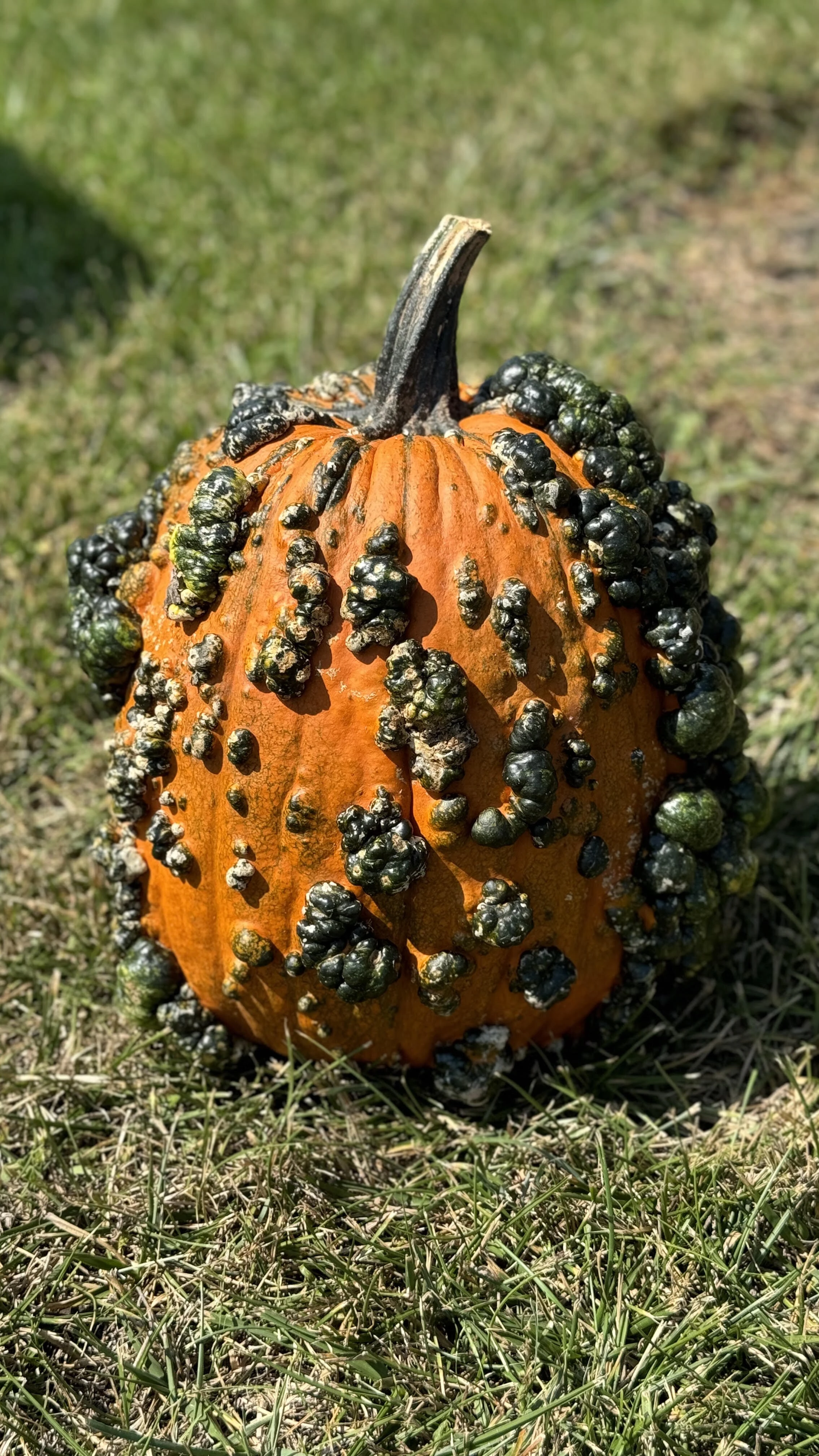
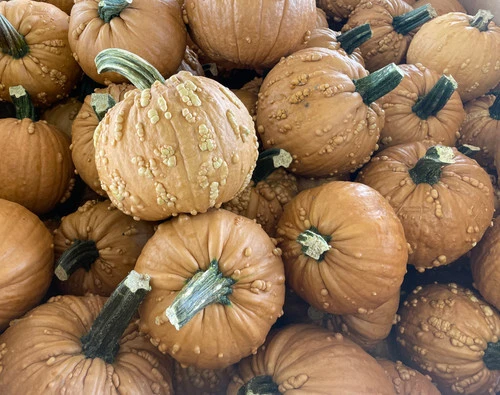
Wartiness is a characteristic of the variety. Certain pumpkins are specifically bred to develop a textured, warty rind. However, having the potential to produce warts does not mean every fruit will necessarily develop the exact same number, size, or distribution of warts under every set of growing conditions.
A pumpkin crop develops within a constantly changing environment. Temperature, rainfall, irrigation, soil moisture, nutrient availability, planting date, fruit-set timing, and overall plant vigor can differ considerably between growing seasons. These conditions influence plant growth and fruit development and should be considered when comparing the appearance of crops from different years.
Research does not provide a simple formula that predicts the amount of warting from a particular temperature, fertilizer rate, or amount of rainfall. For that reason, differences in wart coverage should be evaluated as part of the crop's entire growing environment rather than attributed automatically to one factor.
Temperature, rainfall, humidity, and other seasonal conditions affect how pumpkin plants and fruit develop.
Soil characteristics and nutrient availability influence vine growth, fruit development, and overall crop performance.
Fruit that set at different times can develop under different conditions, even within the same planting.
The appearance of pumpkin fruit changes throughout development. Rind color, hardness, texture, size, and other ornamental characteristics continue developing as fruit approaches maturity. For that reason, wart expression should be evaluated on fruit at a comparable stage of development.
Comparing young fruit with fully developed fruit can give a misleading impression of final wart coverage. Days to maturity can help estimate when a crop should be approaching harvest, but actual fruit maturity should also be considered when evaluating rind characteristics.
Not every pumpkin in a field begins developing at exactly the same time. Pollination and fruit set occur over a period of time, so individual fruit may develop during somewhat different environmental conditions.
Soil can also vary across a field. Differences in drainage, compaction, soil texture, organic matter, moisture availability, and nutrient availability can influence plant growth. These factors help explain why crop development may not be completely uniform from one area of a field to another.
Some variation among individual fruit is normal. When evaluating a warty variety, consider the crop as a whole rather than expecting every pumpkin to have an identical number or pattern of warts.
Fertility has an important influence on pumpkin growth and fruit production. Differences in soil fertility and nutrient availability are therefore worth considering when comparing crops grown in different fields or seasons.
Nitrogen deserves particular attention because it strongly influences vegetative growth. However, there is not a well-established nitrogen rate that can be used to predict or control the amount of warting on a warty pumpkin variety.
Pumpkin fertilizer applications should be based on soil-test results and crop requirements. Excess nitrogen can encourage excessive vegetative growth and delay fruit maturity, so additional nitrogen should not be applied simply in an attempt to increase wart development.
Think about the entire fertility program. When comparing seasons, consider soil-test results, fertilizer rates, application timing, nutrient availability, soil pH, and overall plant growth rather than focusing on nitrogen alone.
Pumpkins perform best in soils that provide both good water infiltration and adequate water-holding capacity. Soil texture, drainage, compaction, pH, organic matter, and available nutrients all influence the root environment and the plant's ability to support fruit development.
When wart expression appears different between two fields, soil conditions are one part of the production history worth comparing. Soil testing provides a more reliable basis for fertility decisions than attempting to adjust nutrients according to fruit appearance alone.
Water availability is a major part of pumpkin production. Pumpkins require a consistent supply of available moisture during the growing season, and water stress during flowering and fruit set can affect fruit set and fruit size.
Rainfall patterns can differ dramatically from one season to another, even when planting date and fertility practices remain similar. Irrigation method, soil drainage, and soil water-holding capacity further influence the moisture environment experienced by the crop.
Do not intentionally create water stress to increase warting. Maintain moisture according to crop needs. There is no established irrigation treatment that reliably produces a desired amount of ornamental warting.
Temperature influences pumpkin growth and maturity. Pumpkin development slows when conditions move well outside the crop's favorable growing range, and fruit developing through a relatively cool season may experience very different growth conditions than fruit developing through sustained summer heat.
Temperature is therefore worth considering when comparing crop development between seasons, but there is not a specific temperature range proven to produce a particular amount of warting.
When the same warty variety looks different from a previous crop, comparing the complete production history is more useful than looking for one isolated cause.
| Compare | Questions to Ask |
|---|---|
| Fruit Maturity | Are fruit being compared at approximately the same stage of maturity? |
| Planting & Fruit Set | Was the planting date similar, and did the main fruit set occur at approximately the same time? |
| Temperature | Was fruit development substantially hotter or cooler than the previous season? |
| Rainfall & Irrigation | Was the season wetter or drier? Was irrigation frequency or availability different? |
| Fertility | Were fertilizer rates, timing, sources, or soil-test results different? |
| Soil & Drainage | Was the crop planted in the same field, soil type, or drainage situation? |
| Plant Vigor | Was vine growth and canopy development similar? |
| Crop Stress | Were drought, saturated soil, insects, disease, or other stresses noticeably different? |
No. The characteristic warts of a variety bred for a textured rind should not be confused with abnormal bumps, lesions, or corky growth that can occur from physiological disorders, disease, or injury.
Warting is an intended ornamental characteristic of the variety. Fruit otherwise develops with the expected overall appearance of that cultivar.
Unexpected raised areas accompanied by discoloration, scabbing, cracking, fruit distortion, leaf symptoms, vine symptoms, or decay should be evaluated separately.
A physiological disorder called edema can produce wart-like protrusions on pumpkin fruit. Edema is not the same process as the characteristic warting of a variety bred for a textured rind.
Edema can develop when roots absorb water faster than the plant can release it through transpiration. Conditions associated with the disorder can include high soil moisture, high relative humidity, and relatively low transpiration. Pressure builds within plant cells, and affected tissue can eventually become corky or raised.
The distinction matters: expected ornamental warting is a characteristic of a warty variety. Edema is a physiological disorder that can create a similar-looking surface on pumpkin fruit.
Several pumpkin disorders and diseases can produce irregular fruit surfaces. Fruit symptoms can include raised spots, scabby lesions, mottling, discoloration, distortion, cracking, or malformed fruit.
If unexpected bumps occur on fruit along with leaf symptoms, unusual discoloration, scabbing, cracking, plant stunting, vine decline, softening, or decay, the problem should not automatically be treated as normal wart development. A local Extension office or plant diagnostic laboratory can help identify the cause from the complete set of symptoms.
Look at the whole plant, not just the bump. Leaf, vine, fruit, and field symptoms can help distinguish an expected ornamental characteristic from a physiological disorder or disease.
The goal should be to grow a healthy crop that develops the characteristic appearance of the variety. There is not enough research to recommend intentionally changing nitrogen, irrigation, or crop stress specifically to increase the number or size of warts.
Manage the crop for healthy growth, not maximum stress.
Follow soil-test recommendations, provide appropriate moisture and drainage, maintain plant health, and allow fruit to reach proper maturity. Deliberately creating nutrient or water stress in an attempt to produce heavier warting could compromise other important crop characteristics.
A warty pumpkin variety is intended to develop its characteristic textured rind, but the finished appearance of the crop may vary from fruit to fruit and season to season.
When wart coverage differs from a previous crop, compare fruit maturity and the complete growing environment, including temperature, rainfall, irrigation, soil conditions, fertility, fruit-set timing, and overall plant vigor. These factors influence pumpkin growth and fruit development, but current research does not provide a simple recipe for producing a specific amount of warting. Grow the crop according to sound production practices and evaluate unusual bumps separately when they are accompanied by other symptoms.
There are no products listed under this category.