There are no products listed under this category.


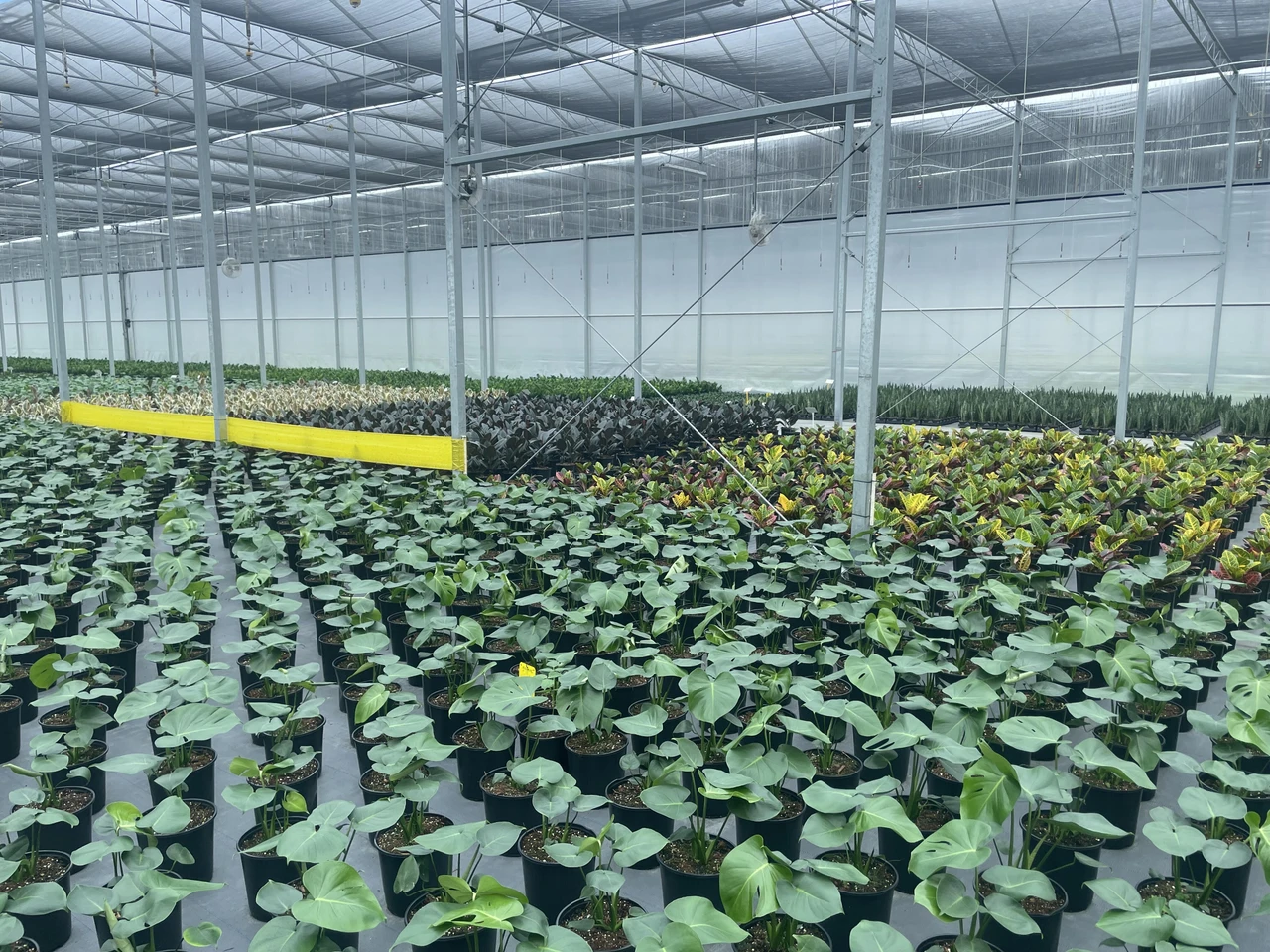
There is no universally best greenhouse or high-tunnel variety. The best fit depends on the structure, crop, season, climate, growing system, disease pressure, management practices, and market.
Protected cultivation changes the environment around the crop, but it does not remove normal biological requirements or eliminate production risks. Temperatures can become too high or too low. Humidity can increase. Rainfall is excluded from the root zone. Pollination can change. Soil nutrients and soluble salts can accumulate differently than outdoors. Pest and disease pressure can shift rather than simply disappear.
Variety selection and crop management should therefore be considered together. A variety that performs well in one protected system may not be the best choice in another.
Both protect crops, but the terms describe different general levels of environmental control. Individual structures vary, so the distinction is better viewed as a continuum than as an absolute dividing line.
| Feature | High Tunnel | Greenhouse |
|---|---|---|
| Temperature control | Usually relies heavily on passive solar heating and ventilation | May include active heating, cooling, fans, and automated controls |
| Ventilation | Commonly roll-up sides, end walls, doors, or vents | May use passive and/or mechanical ventilation and cooling |
| Root environment | Commonly field soil inside the structure | May use soil, containers, substrates, or hydroponic systems |
| Rainfall | Largely excluded from the covered growing area | Excluded |
| Environmental control | Limited to moderate | Potentially extensive, depending on equipment |
These are general distinctions. High tunnels and greenhouses vary widely in design, technology, heating, ventilation, irrigation, and production system.
These are potential advantages, not guarantees. Crop performance and economic return depend on the crop, market, structure, climate, management, and production costs.
Protected environments can differ from open fields in temperature, humidity, light, plant density, airflow, pollinator access, crop duration, and training system. These differences can make certain plant characteristics more or less desirable.
Some cultivars are bred or selected specifically for greenhouse or protected production. Others were developed primarily for field production but can still perform well in a high tunnel. A greenhouse designation should therefore be treated as useful information, not as the only factor in variety selection.
Neither growth habit is universally better. Compact or determinate varieties can simplify management where space, labor, structure height, or harvest period is limited. Indeterminate tomatoes are also widely used in protected production because they can be trained vertically and continue flowering and producing over a long season.
The correct choice depends on the structure and production goal. Growth habit should fit the system rather than being selected simply because a crop is grown under cover.
Many horticultural crops can be grown in protected structures. Common choices include:
Crop choice should also reflect economics. Protected space has a cost, so commercial growers often consider market demand, expected production, labor requirements, crop duration, and potential return per unit of protected area when deciding what to grow.
Cucumbers demonstrate why protected-culture variety selection is more complicated than simply choosing a crop. Field slicers, European types, Beit Alpha types, monoecious cultivars, gynoecious cultivars, and parthenocarpic cultivars can have different fruit characteristics, flowering habits, pollination requirements, and management needs.
Field-type slicing cucumbers can also perform well in high tunnels. A variety does not have to be labeled exclusively as a greenhouse cucumber to be considered for protected production.
It can. A structure can change wind movement and pollinator access, and different crops have very different pollination biology. Variety selection should therefore consider whether fertilization is required for fruit set and how pollination will occur inside the structure.
Tomatoes are self-fertile, but pollen still must be released within the flower for good fruit set. Cucumbers vary more widely. Some require pollen transfer between flowers, while parthenocarpic varieties can develop fruit without fertilization.
Temperature, humidity, cultivar, pollinator activity, and management can all influence fruit set. Poor fruit set should not automatically be attributed to the seed or variety without considering the growing environment.
Yes. Solar heating that benefits crops during cool weather can become a disadvantage during warm, sunny conditions. Excessive temperature can reduce plant growth, interfere with pollination and fruit set, increase water demand, contribute to heat stress, and reduce crop quality.
High tunnels commonly rely on roll-up sides, doors, end-wall openings, and other passive ventilation. Depending on the structure, greenhouse systems may also use fans, evaporative cooling, shade materials, or automated environmental controls.
Not necessarily. An unheated high tunnel can moderate temperatures and provide meaningful season extension, but it does not guarantee that temperatures will remain above freezing during cold weather.
Actual protection depends on outside temperature, wind, cloud cover, structure design, soil heat storage, number of covering layers, supplemental row covers, crop cold tolerance, and whether supplemental heat is available. Growers should manage cold-sensitive crops according to actual temperatures rather than assuming the plastic covering makes the crop frost-proof.
Plants release water vapor through transpiration. In a protected structure, restricted air exchange can allow humidity to rise. Condensation can also occur when humid air contacts cooler plant or structural surfaces.
Ventilation helps remove heat and moisture, reduce relative humidity, improve air movement through the crop canopy, and reduce the amount of time foliage remains wet. Plant spacing, pruning, trellising, weed management, and irrigation method can also affect canopy humidity.
Humidity management is particularly important because some diseases are favored by protected environments. University of Minnesota Extension identifies tomato leaf mold as primarily a greenhouse and high-tunnel problem and reports that severe epidemics are favored when relative humidity is at or above approximately 85 percent.
Protected culture changes disease pressure rather than simply eliminating it. Excluding rainfall can reduce splash dispersal and leaf wetness associated with some field diseases. At the same time, high humidity, condensation, dense foliage, limited air movement, and repeated cropping can favor other diseases.
Tomato leaf mold and gray mold are examples of diseases that can be particularly important in protected tomato production when humidity is favorable. Disease-resistance priorities should therefore be crop-specific and based on the diseases relevant to the grower's region and production system.
Because the structure excludes most rainfall, irrigation can become the primary source of crop water. Drip irrigation is commonly used because it delivers water directly to the root zone without routinely wetting the foliage.
There is no universal irrigation schedule. Water use changes with crop, growth stage, soil or substrate, rooting volume, temperature, solar radiation, humidity, plant density, and season. Irrigation should be adjusted to crop demand and actual root-zone moisture rather than following a fixed calendar alone.
Drip placement also matters. If only a narrow strip of soil remains moist while the surrounding bed stays dry, roots may occupy a smaller effective soil volume than the bed dimensions suggest.
It can become different over time because the structure changes rainfall, irrigation, crop intensity, nutrient inputs, temperature, and leaching. Long production seasons and high-yielding crops can also remove substantial amounts of nutrients.
University of Minnesota Extension recommends testing high-tunnel soils more frequently than open-field soils. In addition to standard fertility measurements, soluble salts, nitrate, irrigation-water quality, and other factors may deserve closer attention in intensive tunnel production.
Outdoors, substantial rainfall can move soluble salts below the active root zone. A high tunnel largely excludes that rainfall. Salts supplied by fertilizers, composts, manures, and irrigation water can therefore accumulate when inputs exceed crop uptake and leaching.
Excessive salinity makes it more difficult for roots to take up water and can reduce plant growth. Crop sensitivity differs, so a salt concentration tolerated by one crop may injure another.
Electrical conductivity, or EC, is commonly used to assess soluble salt concentration. Because test methods and interpretation can differ, growers should use an appropriate laboratory method and regional recommendations when evaluating results.
Not automatically. Long-season, high-yielding crops may remove more nutrients than comparable field crops, but that does not mean fertilizer should simply be increased without testing.
Soil testing, expected crop yield, nutrient credits from soil and organic amendments, irrigation-water nutrients, and previous applications should all be considered. Excessive fertilizer, compost, or manure can contribute to nutrient imbalance and soluble salt accumulation.
Fertigation is the application of plant nutrients through the irrigation system. It is commonly used with drip irrigation in intensive protected production because nutrients can be supplied during crop growth rather than relying entirely on preplant applications.
Fertigation does not remove the need for testing or nutrient planning. Total nutrient application still needs to account for crop requirements, soil fertility, irrigation-water nutrients, previous amendments, and the potential for salt accumulation.
Vertical training can use the height of the structure, improve access for harvest and scouting, keep fruit off the ground, and help manage canopy density. Tomatoes and cucumbers are commonly trained vertically in high tunnels and greenhouses.
Pruning can help maintain the intended training system and improve air movement through dense foliage. However, pruning recommendations are crop- and system-specific. Removing excessive foliage can reduce photosynthetic area and expose fruit to additional light or heat, while insufficient canopy management can produce dense, humid growth.
Variety architecture matters. A cultivar intended for a single-leader tomato system may be managed differently from a determinate tomato, bush pepper, or trellised cucumber.
Not automatically. Vertical training can allow growers to use protected space efficiently, but increasing plant density also increases competition for light, water, and nutrients and can reduce airflow through the canopy.
Appropriate spacing depends on crop, cultivar, training system, number of leaders, structure width and height, season, light conditions, and management. The goal is efficient use of space without creating a canopy that the environment and management system cannot support.
Yes. A plastic covering does not prevent soilborne pathogens, nematodes, insects, or fertility problems from building within an intensively used production area. Repeatedly growing the same crop or plant family can increase certain rotation-related risks.
Rotation can be difficult because protected space is valuable and growers may want to repeatedly produce their highest-value crops. Nevertheless, crop history should remain part of disease, pest, and soil-management planning.
Yes. Grafting is used commercially in crops such as tomatoes and cucurbits. The desired fruiting variety, or scion, is joined to a rootstock selected for characteristics such as vigor or resistance to particular soilborne diseases.
Grafting can be useful in certain production systems, but it is not required for every grower and does not provide universal protection against all pests, diseases, fertility problems, or environmental stress. Rootstock and scion compatibility, disease resistance, vigor, cost, and management should all be considered.
No. Protected cultivation gives growers greater ability to modify parts of the growing environment, and protection from rainfall and severe weather can improve marketable quality in some situations. It does not guarantee superior fruit or higher yield.
Excessive heat, poor fruit set, inadequate irrigation, salinity, nutrient imbalance, high humidity, pest pressure, disease, insufficient light, or inappropriate plant density can reduce quality even inside a well-designed structure.
No. Earlier or later production can create access to different market windows, but price depends on local supply, demand, crop quality, competition, marketing channel, and customer preferences.
Commercial growers should consider the cost of the structure, labor, irrigation, heating or cooling where applicable, trellising, crop inputs, harvest, and marketing when evaluating the economics of protected production.
Protected structures can reduce exposure to some environmental stresses while creating or increasing others. Potential problems include:
These risks do not mean protected cultivation is undesirable. They illustrate why successful greenhouse and high-tunnel production requires active environmental and crop management.
Greenhouses and high tunnels can provide valuable opportunities for season extension, weather protection, intensive crop management, and access to production windows that may be difficult to achieve outdoors. They also create a growing environment with its own temperature, humidity, irrigation, fertility, pollination, disease, and soil-management challenges.
Variety selection is one part of that system. Protected-culture varieties can offer useful characteristics, but a greenhouse label alone does not make a cultivar the best choice for every structure. Field cultivars may also perform very well when their growth habit, disease resistance, fruit characteristics, and environmental requirements fit the system.
The most useful question is therefore not simply, “What is the best greenhouse variety?” It is, “Which variety best fits my structure, environment, season, production method, management capacity, and market?”
Protected cultivation gives growers more ability to influence the crop environment, but greater control also requires greater attention to how the crop, variety, structure, soil, water, climate, and management system interact.
Protected-culture recommendations vary with crop, structure, climate, region, soil or growing medium, and production system. The following land-grant university resources provide additional research-based information.
For crop-specific planting, fertility, irrigation, pest, disease, and pesticide recommendations, consult your local Cooperative Extension service or another qualified agricultural professional. Pesticide products, labels, registrations, and greenhouse-use restrictions can vary by product and jurisdiction. Always follow the current product label.
There are no products listed under this category.