There are no products listed under this category.


Mature rhubarb can withstand light frost (28°F to 32°F) in the fall, but a hard frost (below 28°F) in late spring can damage the stalks. If stalks become mushy after a hard frost, avoid eating them, as oxalic crystals from the leaves may have moved into the stalks. Only firm, upright stems are safe to eat.
Rhubarb thrives in moist, well-drained soil that is deep and rich in organic matter. Fields should be free from perennial weed issues and should be deeply plowed. Raised beds are a good option for heavy clay soils.
Plant rhubarb in full sun. Established plants should be divided every 5 to 10 years in early spring or fall when the stems become crowded and thin. Remove flower stalks as soon as they appear to prevent energy diversion from stalk and root development. Rhubarb is mostly pest-free but may occasionally suffer from rhubarb curculio attacks on stems. Crown rot, a serious disease in poorly drained soil, can occur and requires the removal of infected plants, which should be burned. Leaf spot is another potential concern.
When to Begin: Begin harvesting rhubarb in the second year after planting, removing only a few stalks per plant. From the third year onward, you can harvest more freely, but never remove more than one-third to one-half of the stalks from a plant at once.
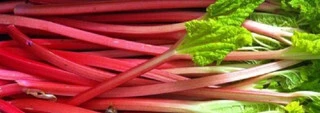
Harvest the longer, reddish stalks by grasping them near the base and pulling upwards, twisting as you pull, or using a sharp knife to slice them close to the crown. Remove the leaves and stem base, leaving only the edible colored stalk.
For optimal quality, use stalks as soon as they are harvested. Freshly cut rhubarb can be stored for up to 1 week in the refrigerator, but its crispness will decrease over time. To refresh crispness, place stored stems in water, though flavor may slightly dilute.
There are no products listed under this category.