There are no products listed under this category.


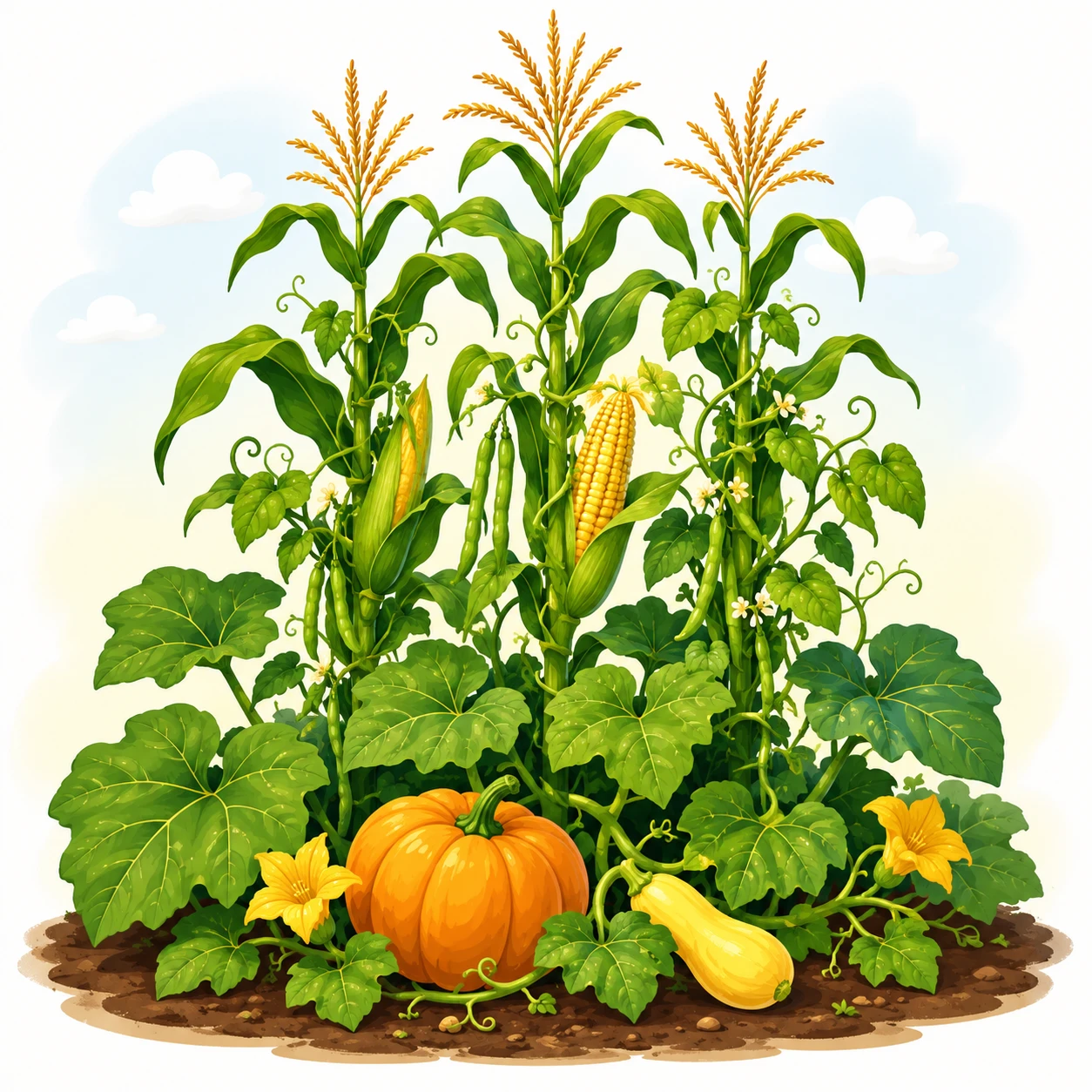
The Three Sisters method refers to planting corn, beans, and squash together, where each crop contributes something to the growing system. Historically, this was an effective system used by Indigenous farmers to produce food within the tools, varieties, and agricultural systems available at the time.
Tall corn stalks provide a natural vertical support for climbing beans.
Vining beans use the corn for support while legumes contribute nitrogen to the cropping system.
Broad squash leaves shade the soil surface and can help suppress weeds.
Together, the three crops created a practical intercropping system. While the method remains useful in traditional and small-scale settings, it is generally less efficient for modern commercial production where crops are managed individually for spacing, fertility, irrigation, pest control, and harvest.
The method was particularly well-suited for:
Corn acted as support for the beans, beans contributed nitrogen through their association with nitrogen-fixing bacteria, and squash provided living groundcover that shaded the soil and helped suppress weeds.
Modern crop production is generally built around managing each crop according to its own requirements. Separating crops allows growers greater control over spacing, fertility, irrigation, pest and disease management, and harvest.
This greater level of control can lead to more uniform stands, easier management, and higher marketable yields in commercial systems.
Growers can achieve many of the original goals of the Three Sisters system using management practices that provide greater control over each crop.
There are no products listed under this category.