There are no products listed under this category.


There is no single tillage system that is best for every farm, field, garden, crop, climate, or grower.
Two successful growers can manage their soil differently and both have sound reasons for doing so. A system that performs well on a well-drained field may behave differently on poorly drained soil. A practice that helps conserve moisture during a hot, dry summer may create a challenge during a cold, wet spring. A vegetable grower preparing fine seedbeds has different needs from a grain producer planting through crop residue, and a home gardener working permanent beds has different needs again.
Good soil management therefore begins by asking what the grower is trying to accomplish, what limitations exist on that particular land, and whether the benefits of a soil-disturbing operation justify its effects. Tillage, reduced tillage, strip-till, and no-till should be evaluated as management options rather than universal rules.
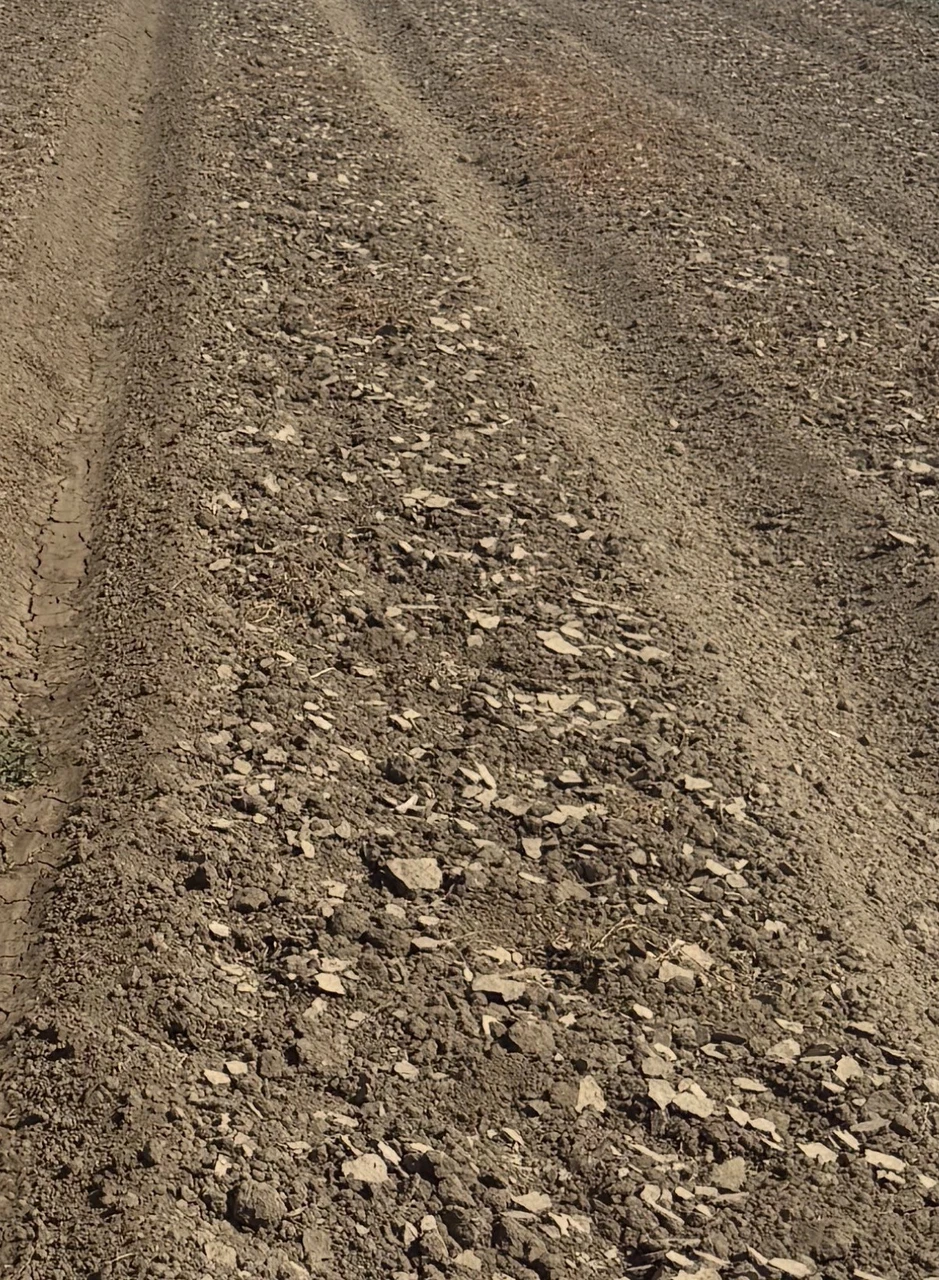
Tillage is the mechanical disturbance of soil for a production purpose. Depending on the operation, tillage may loosen or turn soil, manage vegetation, incorporate residue or amendments, prepare a seedbed, form beds, or address particular soil conditions.
The word tillage covers a wide range of practices. Deep moldboard plowing, chisel plowing, disking, shallow cultivation, rotary tillage, vertical tillage, and targeted disturbance are not identical in the amount, depth, or intensity of soil they disturb.
No-till is a production system that avoids full-width tillage before planting and limits soil disturbance primarily to the area needed for planting and certain other field operations. Crop residue is generally retained on the soil surface and seed is placed through that residue into the soil.
No-till does not mean that the soil is literally never disturbed. Planter openers create a seed slot, row cleaners may move residue away from the row, and some fertilizer or manure applications can create localized disturbance. The important distinction is the absence of routine full-width tillage.
No. Soil disturbance exists on a spectrum. Many growers use systems between intensive full-width tillage and continuous no-till.
| Consideration | Tillage | Reduced / No-Till |
|---|---|---|
| Seedbed | Can quickly create a loose, smooth, uniform planting surface. | Requires successful planting through residue and good seed placement. |
| Spring Warming | Exposed soil can warm and dry more rapidly. | Residue can keep soil cooler and wetter in spring. |
| Moisture Conservation | Greater exposure and disturbance can increase evaporation. | Surface residue can reduce evaporation and protect soil moisture. |
| Erosion | Leaving soil bare can increase susceptibility to wind and water erosion. | Surface residue provides important protection against erosion. |
| Weeds | Can physically uproot or bury weeds and disrupt perennial roots. | Requires a different weed-management strategy and can favor different weed communities. |
| Amendments | Provides a straightforward way to mechanically incorporate certain amendments. | Placement may rely more on surface application, banding, injection, or other targeted methods. |
| Soil Structure | Immediately loosens soil, but repeated intensive disturbance can break down aggregates. | Reduced disturbance can allow aggregation and pore networks to develop over time. |
| Field Passes | May require additional machinery passes, fuel, labor, and time. | Can reduce tillage passes, although specialized planting equipment or management may be needed. |
These are general tendencies, not guaranteed outcomes. Soil, climate, crop, equipment, timing, and management can substantially change the result.
Tillage remains widely used because it can accomplish important production objectives quickly and effectively. Depending on the crop and situation, tillage may be used to:
Reducing soil disturbance can protect several important soil functions, especially when it is combined with good residue management, crop rotation, cover crops, and other soil-conservation practices.
Not simply. Tillage has legitimate agronomic purposes and can provide important short-term benefits. The concern is primarily with unnecessary, excessive, poorly timed, or repeatedly intensive disturbance. Frequent disturbance can break apart aggregates, reduce protective residue, increase erosion risk, accelerate organic-matter decomposition, and alter soil biological habitat.
No. No-till provides important soil-conservation benefits, but it also creates different management challenges. Heavy residue can slow soil warming and drying, planting through residue requires proper equipment and adjustment, weed management changes, nutrients may become distributed differently in the soil profile, and poorly managed residue can contribute to uneven seed-zone temperature and moisture.
These challenges may be minor in one field and important in another. Soil drainage, climate, crop rotation, residue level, planter performance, and management experience all influence how a no-till system performs.
Sandy, silty, and clayey soils differ in drainage, water-holding capacity, aggregation, compaction risk, and how quickly they warm and dry. A practice that works well on a well-drained soil cannot automatically be expected to perform identically on a cold, poorly drained soil.
This is one reason tillage decisions should be site-specific. Soil texture, drainage, topography, organic matter, previous management, and existing compaction all matter.
Absolutely. Weather is one of the clearest examples of why soil management is not one-size-fits-all.
A characteristic can therefore be an advantage in one environment and a management challenge in another.
Operating on soil that is too wet can create compaction and structural problems regardless of the overall tillage philosophy. Tillage in wet soil can smear or compact soil, while heavy equipment traffic can compress wet soil even in reduced-till or no-till systems.
No-till planting itself is not immune. Disk openers operating in soil that is too wet can create compacted seed-slot sidewalls that roots may have difficulty penetrating.
Sometimes targeted tillage can temporarily relieve a verified compacted layer, but tillage is not a universal or permanent solution to compaction. If the cause remains, such as repeated traffic on wet soil, the soil can become compacted again.
Repeated tillage at a similar depth can also contribute to dense layers below the worked zone. Before using deep tillage specifically for compaction, it is useful to determine whether a restrictive layer actually exists, how deep it is, and what caused it.
No. Reducing tillage can protect soil structure, but it does not make soil immune to compaction. Heavy machinery, repeated wheel traffic, field operations on wet soil, livestock traffic, and other pressures can compact soil under any tillage system.
Tillage mechanically loosens, separates, and rearranges soil. That can make the surface soft, aerated, and easy to plant in immediately after the operation. This is a real short-term benefit.
However, freshly loosened soil is not the same thing as stable long-term soil structure. Soil health also involves aggregate stability, continuous pores, root channels, organic matter, biological activity, infiltration, and resistance to erosion and compaction.
Seeds need suitable depth, moisture, temperature, and seed-to-soil contact for dependable establishment. Tillage can create a smooth and uniform seedbed, which can be particularly useful for small, direct-seeded crops.
No-till does not eliminate those requirements. Instead, the planter, drill, residue management, and field conditions must create an appropriate seed environment without full-width tillage.
Crop residue is extremely valuable, but it still requires management.
No-till management begins before planting. If harvest equipment leaves alternating bands of heavy and light residue, the following crop can encounter different soil temperatures, moisture conditions, nutrient distribution, and planter performance across the field. Uniform residue distribution helps create a more consistent seed environment.
Water management involves more than one process. Surface residue can reduce evaporation and protect soil from raindrop impact. Stable aggregates, root channels, and soil pores can support infiltration. Intensive disturbance and bare soil can increase susceptibility to crusting, runoff, and erosion.
However, actual water behavior also depends on soil texture, drainage, compaction, slope, rainfall intensity, organic matter, crop roots, and field history. No single tillage label guarantees good infiltration or drainage.
Exposed soil is generally more vulnerable to wind and water erosion than soil protected by crop residue or living vegetation. For that reason, retaining surface cover is especially important on sloping and highly erodible ground.
Tillage can also physically move soil downslope over repeated operations, a process known as tillage erosion. The importance of this process increases with topography, implement type, and repeated soil movement.
Not automatically. Reducing disturbance can reduce organic-matter losses and surface residue can contribute organic material, but the amount and rate of change depend on soil type, climate, crop rotation, cover crops, residue production, residue removal, depth of measurement, and how long the system has been in place.
No-till can also concentrate organic matter nearer the surface because residues are not routinely mixed through the tilled layer. This makes consistent soil-sampling depth important when comparing soil-test results over time.
Soil organisms respond to disturbance, food availability, moisture, temperature, residue, roots, and many other factors. Repeated physical disturbance can disrupt habitat and soil aggregates, while retaining residue and reducing disturbance can create conditions favorable to many soil organisms.
This does not mean tilled soil is biologically inactive or that simply stopping tillage guarantees a healthy soil ecosystem. Soil biology is influenced by the entire management system.
Yes. Tillage can be an effective mechanical weed-management tool. It can uproot young weeds, disrupt perennial root systems, bury some seeds or vegetation, and prepare a clean planting area.
At the same time, soil disturbance can bring previously buried weed seeds closer to the surface where conditions may favor germination. Reduced-tillage systems often develop different weed communities, and perennial weeds can become more important when their underground structures are no longer regularly disturbed.
Yes, for some crop and pathogen combinations. Certain pathogens can survive in infected crop residue, so residue management may be one consideration in a disease-management program. However, it is not accurate to say that residue simply causes disease or that tillage universally prevents disease.
Disease development depends on the specific pathogen, crop susceptibility, weather, crop rotation, residue, and other management practices. Disease decisions should therefore be made for the particular crop and disease involved.
It can. Without regular mechanical mixing, some nutrients and organic material can become more concentrated near the soil surface. This is often called nutrient stratification.
Tillage provides a direct way to mix certain amendments through the worked layer. No-till systems may instead use surface applications, banding, injection, planter placement, or other strategies depending on the nutrient, crop, soil, and production system.
No. They are separate management practices that are often used together. No-till addresses soil disturbance. Cover crops add living plants and roots during periods when a cash crop may not be growing.
A grower can use cover crops with conventional tillage, reduced tillage, strip-till, or no-till. Likewise, a field can be managed with no-till without using cover crops. When combined successfully, the practices can complement one another, but one does not automatically require the other.
Strip-till disturbs a relatively narrow zone where the crop will be planted while leaving much of the soil and residue between rows undisturbed. It is one example of a system designed to combine selected benefits of tillage with selected benefits of residue retention.
On some cold or poorly drained soils, a tilled planting strip can warm and dry faster than an undisturbed residue-covered seed zone. At the same time, residue between the rows continues to protect much of the soil surface. Suitability still depends on slope, erosion risk, crop, soil, equipment, and local conditions.
Not inherently. Yield response depends on the crop, soil, drainage, climate, residue, planting conditions, fertility, weed and pest management, equipment setup, and many other factors.
Tillage does not inherently guarantee higher yield either. The relevant question is whether the entire production system creates suitable conditions for crop establishment, root growth, water and nutrient availability, and season-long crop development.
There is no universal answer. Reducing tillage can lower fuel use, machinery hours, labor, and the number of field passes. However, transitioning to no-till may require planter modifications, residue-management equipment, different weed-management strategies, or other investments.
Tillage operations have fuel, labor, machinery, and time costs, but a tillage pass can still provide economic value when it accomplishes an important production objective.
Gardeners have many of the same soil-management choices, but the tools and scale are different. A rototiller may be useful for quickly establishing a new garden, managing existing vegetation, loosening severely compacted soil, incorporating an amendment when appropriate, or preparing a seedbed.
Once a garden is established, annual intensive tillage is not automatically necessary. Permanent beds, mulch, surface-applied compost, cover crops, hand tools, shallow seedbed preparation, and broadforks are among the options gardeners can use to reduce disturbance.
Yes. Initial establishment and long-term maintenance do not have to use the same level of disturbance. For example, a new garden established in compacted turf may benefit from initial soil preparation, while future seasons may require much less disturbance once permanent beds, soil cover, and good structure are established.
Not automatically. Ask what annual tillage is intended to accomplish. If the purpose is weed management, amendment incorporation, seedbed preparation, or another specific need, consider whether full-width tillage is necessary or whether a more targeted method could accomplish the same objective.
This does not mean a garden should never be tilled. It means the decision should be based on the condition of the soil and the needs of the crop rather than habit alone.
Yes. Reduced-tillage and no-till approaches can be used in vegetable production, but vegetable systems can present special challenges because growers may need fine seedbeds, frequent rotations, bed formation, intensive weed management, transplanting, direct seeding, and repeated harvest access.
Larger-seeded crops and transplants may tolerate a less finely prepared seedbed than very small direct-seeded crops. The appropriate system therefore depends partly on what is being planted and how the crop is established.
The soil-health principles overlap, but the actual practices can be very different. A home gardener may use permanent beds, compost, mulch, hand tools, and transplants. A commercial field-crop producer may use specialized planters, row cleaners, fertilizer placement equipment, crop residue from the previous harvest, and large-scale weed-management programs.
Advice should therefore be interpreted for the scale and production system in which it will be used.
Some effects can occur quickly, while others develop over years. Surface residue can immediately change evaporation and soil temperature, while changes in aggregation, organic matter, biological activity, pore networks, and other soil properties may take much longer.
One unusually wet, dry, hot, or cold season can also influence results. Long-term soil-management decisions are better evaluated across multiple seasons than from a single year.
Do not judge soil management only by whether the surface looks loose or whether a particular practice has a popular reputation. Look at the performance of the whole system.
Begin with the problem or objective rather than beginning with the implement.
Absolutely. Growers do not all have the same land, weather, crops, equipment, labor, experience, weed pressure, drainage, residue, market, or management goals. Even two fields on the same farm can require different decisions.
A practice should be judged by how well it addresses the needs and limitations of the particular production system while protecting the long-term productivity of the soil. Successful soil management is rarely about following a single rule everywhere.
Tillage and no-till are tools within a much larger soil-management system. Tillage can provide a clean seedbed, mechanical weed control, amendment incorporation, targeted compaction management, residue management, and faster warming or drying of certain soils. Those are real benefits.
Reduced-tillage and no-till systems can protect residue, reduce erosion, conserve moisture, reduce repeated disturbance, protect soil aggregates, support soil biological habitat, and reduce some field passes. Those are real benefits too.
Neither system removes the need for good management. No-till does not eliminate weeds, compaction, fertility concerns, disease, or planting challenges. Tillage does not automatically damage a crop or mean that soil is being managed poorly. What matters is the reason for the operation, the intensity and timing of disturbance, and the conditions of the particular soil and production system.
The goal is not maximum tillage or minimum tillage simply for the sake of following a system. The goal is appropriate soil management for your land, your crop, your environment, and your operation.
Soil-management recommendations vary by soil, climate, crop, and production system. The following USDA and land-grant university resources provide additional information on tillage, no-till, soil health, residue management, compaction, and vegetable production.
For recommendations specific to your soil, crop, climate, and region, consult your local Cooperative Extension office, USDA Natural Resources Conservation Service office, or another qualified local agricultural professional.
There are no products listed under this category.