There are no products listed under this category.


Successful crop planning depends on understanding three commonly referenced timing metrics: germination time, days to maturity, and heat units (Growing Degree Days, GDDs). While often used interchangeably, these measurements describe different stages of crop development and must be interpreted correctly for accurate scheduling.
Germination time refers to the number of days required for a seed to sprout under optimal soil conditions.
Germination depends primarily on:
Typical examples (under ideal conditions):
Cool soils slow germination: excessively wet soils reduce oxygen and may cause seed rot. Germination time does not include transplant production time or days to harvest.
Days to maturity estimate the time from planting until harvest readiness. However, interpretation depends on crop type.
For crops like beans, corn, carrots, or peas, days to maturity are counted from the date of direct seeding.
A 60-day bush bean reaches harvest approximately 60 days after sowing.
For crops commonly started indoors (tomato, pepper, cabbage), days to maturity are typically counted from the transplant date, not from initial seeding.
A tomato listed as “75 days” generally reaches maturity 75 days after transplanting into the field or garden.
Seedling production time (often 4–8 weeks) must be added separately when scheduling total crop time.
Seed catalogs often list “Days to Maturity (from transplant)” to standardize comparisons among varieties.
This measurement allows growers to:
While calendar days provide a general estimate, plant development is driven primarily by temperature.
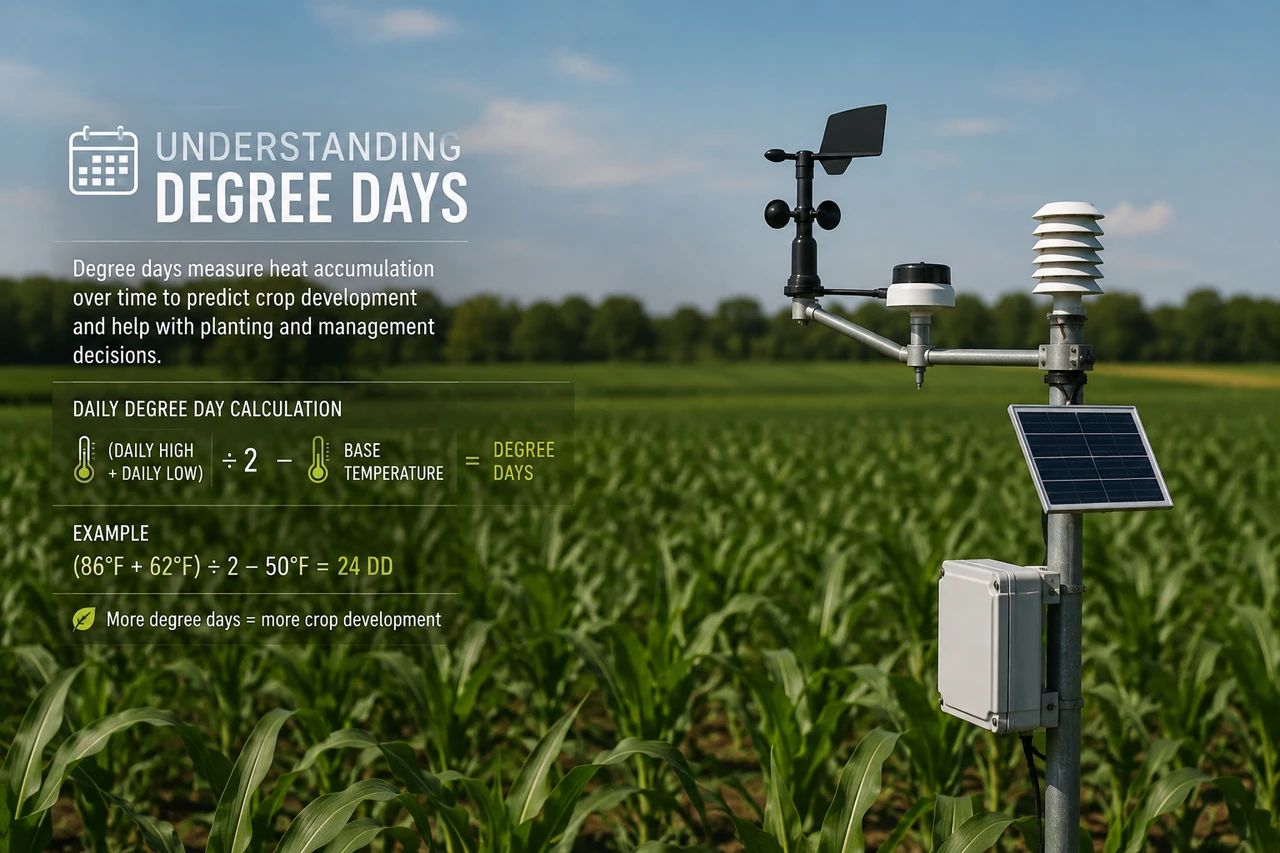
Growing Degree Days (GDD) measure accumulated heat over time using the formula:
The base temperature is the minimum temperature at which a crop grows. Common base temperatures:
Heat accumulation determines developmental milestones such as flowering, fruit set, and maturity. Two seasons with identical calendar length may produce different maturity dates depending on temperature patterns.
GDDs help growers:
For example, sweet corn hybrids are often categorized by GDD requirements rather than calendar days to improve regional adaptability.
When scheduling crops:
Environmental stress can delay maturity beyond listed estimates.
There are no products listed under this category.