Trellising refers to any structure or support system used to train plants to grow upright or spread in a controlled way. Many crops, especially vines like tomatoes, cucumbers, melons, and pole beans, benefit from trellising, as it improves airflow, makes harvesting easier, and can increase yield.
In the following section, we will break down common trellis types and their main uses.
Vertical Stakes
Single stakes made from wood, metal, or bamboo, placed next to the plant which it is then tied to as it grows.
Vertical stakes are best for
- Indeterminant tomatoes
- Pole beans
- Small climbing vines
Pros
- Simple and low cost
- Minimal materials needed
Cons
- Manual tying as a plant grows
- Limited support for heavy fruit
Cages
Cages are wire or metal rings placed around plants, so they grow inside the structure.
Best for
- Tomatoes
- Eggplants
- Peppers
Pros
- Self-supporting
- No continual tying needed
Cons
- Bulky to store
- May not support heavy yields well
Ideal for tomatoes in smaller plots where you would want a simple support that does not need regular supervision and maintenance.
Fence or Mesh Trellis
This is a flat panel of wire mesh, plastic netting, or fencing material mounted vertically between posts.
Fence or mesh is best for
Pros
- Plants can climb freely
- Great airflow and light penetration
- Easy to harvest
Cons
- Needs sturdy support for heavy vines
A-Frame/V-Trellis
Two panels joined at the top in an “A” or “V” shape, creating two faces for plants to climb.
Best for
- Pole beans
- Vining crops where you want accessible rows
Pros
- Good for walk-through access
- Supports a lot of plants in a small footprint
Cons
- Requires more material than a single trellis
A-frame trellises are great for families or community gardens where ease of picking and multiple plants per foot of space matter.
Tripod / Teepee Trellis
Three or more poles tied at the top creating a pyramid-like structure.
Best for
Pros
- Simple to build
- Strong support
Cons
- Can shade nearby plants if large
Use teepees in backyard plots to create vertical interest and space-efficient bean production.
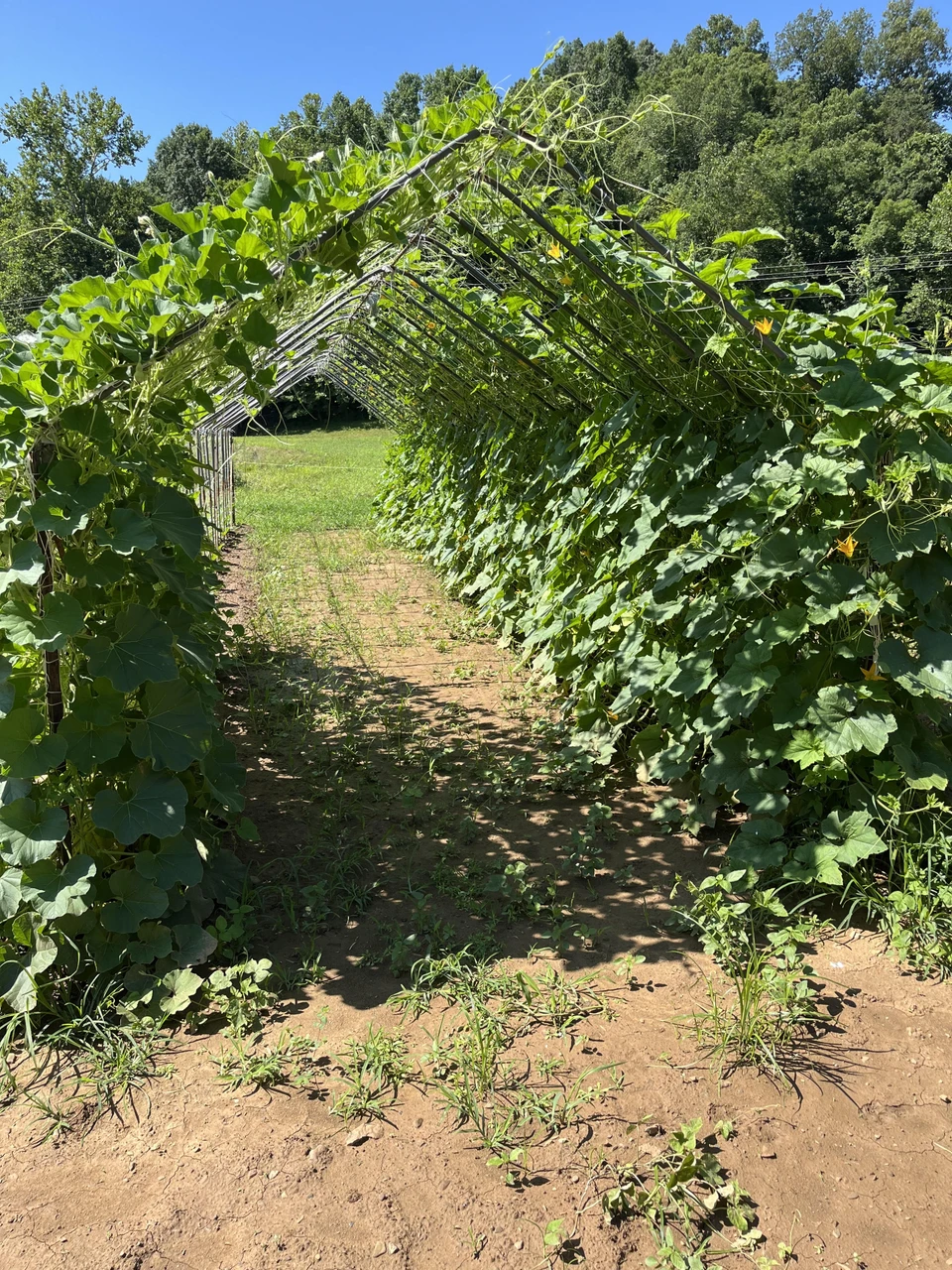
Arbors or Arch Trellises
Curved overhead structures often decorative that plants climb over.
Best for
- Gourds
- Melons (if strong enough)
- Decorative vining flowers
Pros
- Functional and aesthetic
- Can create shaded walkways
Cons
Arbors are perfect in ornamental gardens or larger landscapes where form meets function.
For more information, please see links below:
There are no products listed under this category.


