

There are no products listed under this category.


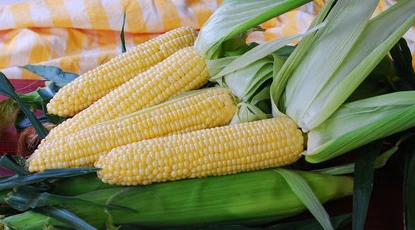
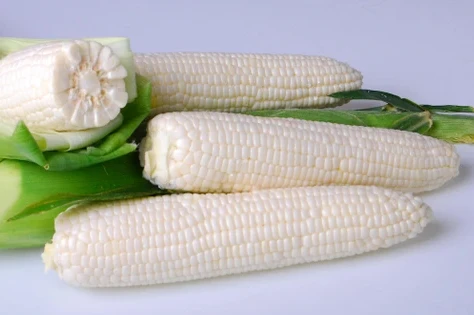
One of the most common misconceptions about sweet corn is that kernel color determines eating quality. Yellow, white, and bicolor describe the appearance of the kernels. They do not, by themselves, tell you how sweet, tender, crisp, or flavorful a variety will be.
Color is not a sweetness rating. A yellow, white, or bicolor sweet corn can be SU, SE, Sh2, synergistic, or another genetic type. Eating quality depends on the genetics and characteristics of the particular hybrid, not simply whether its kernels are yellow or white.
Yellow kernels contain carotenoid pigments that are absent or greatly reduced in white kernels, so the colors are chemically and visually distinct. However, color alone should not be used to predict sweetness, tenderness, texture, or overall eating quality.
Sweet corn types are classified according to genes that influence carbohydrate development in the kernel. These genetic differences are important because they affect sugar levels, conversion of sugar to starch, kernel texture, storage characteristics, and isolation requirements.
SU is the traditional sweet corn type. The su gene increases sugar compared with field corn, but sugars are converted to starch relatively quickly after harvest.
Sugary enhanced sweet corn combines the traditional sugary background with se genetics that increase sugar levels and can improve the retention of eating quality after harvest compared with traditional SU types.
Sh2 sweet corn contains the sh2 mutation, which results in substantially greater sugar accumulation and slower conversion of sugar to starch. The mature dry seed has a characteristically shrunken appearance, which is the origin of the name.
Synergistic hybrids combine multiple sweet corn genes within the same ear. Depending on the hybrid, kernels can express different genetic combinations, including sugary enhanced and supersweet characteristics.
Augmented Sh2 hybrids combine supersweet sh2 genetics with additional sweetness or tenderness-enhancing genes. These hybrids were developed to provide the high sugar and postharvest characteristics of supersweet corn while improving eating quality and kernel tenderness.
Kernel color is genetically controlled and primarily describes the appearance of the corn. Modern sweet corn hybrids are available in different combinations of kernel color and sweetness genetics. Yellow, white, and bicolor do not represent different levels of sweetness, tenderness, or eating quality.
Remember: Two sweet corn varieties with the same kernel color can have very different eating characteristics, while yellow, white, and bicolor hybrids can share the same general sweetness genetics. When comparing varieties, look at the genetic type and characteristics of the individual hybrid rather than using kernel color to predict eating quality.
No. Kernel color by itself is not a dependable measure of eating quality. A white corn is not automatically sweeter or more tender than a yellow corn, and a bicolor corn does not automatically combine the flavor characteristics of yellow and white corn.
Sweetness, tenderness, and texture are much more closely related to the sweet corn genetic type and the traits of the individual hybrid. Breeders can therefore develop excellent eating quality in yellow, white, or bicolor varieties.
Harvest maturity and freshness are also critical. Corn harvested too early may not have reached its best eating quality, while overmature kernels become tougher and starchier. After harvest, temperature and storage time also influence sweetness and texture.
Corn is primarily wind-pollinated. Pollen is released from the tassels and carried to receptive silks. Each silk is associated with an individual ovule that can develop into a kernel after successful fertilization.
Sweet corn is unusual among many garden vegetables because the harvested portion is the kernel itself. As a result, pollen from another corn type can influence characteristics of the kernels developing on the ear during the current season. This immediate pollen effect is one reason genetic compatibility and isolation matter in sweet corn production.
Important: Cross-pollination does not change the genetic identity of the mother plant itself. It can, however, change characteristics of the developing kernels because those kernels result from fertilization.
Yes. Pollen can affect kernel color on the ear being produced. For example, pollen carrying dominant yellow-color genetics can cause yellow kernels to appear on ears of white sweet corn.
However, a color change does not automatically mean eating quality has changed. Cross-pollination between yellow and white sweet corn of the same compatible genetic type can affect the appearance of the kernels without necessarily changing their eating quality. For growers selling corn by color, the primary concern may therefore be visual uniformity and market appearance.
The more important eating-quality concern occurs when genetically incompatible corn types pollinate one another. For example, Sh2 supersweet corn pollinated by standard sweet corn, field corn, or popcorn can produce kernels that do not express the expected supersweet quality and may become starchy.
This is why growers should distinguish between color isolation and genetic isolation. Mixing yellow and white pollen within a compatible genetic class may primarily affect appearance. Crossing incompatible sweetness types can affect eating quality.
Can change kernel appearance. Between compatible sweet corn types, this does not necessarily reduce sweetness or eating quality.
Can alter sugar and starch characteristics of the developing kernels and reduce the expected eating quality of certain sweet corn types.
Corn varieties that require isolation can be separated by distance or by flowering time. The goal is to prevent incompatible pollen from reaching receptive silks.
Penn State recommends at least 500 feet of isolation where genetic isolation is required to prevent starchy kernels. Distance recommendations can vary by production system, surrounding corn acreage, prevailing winds, and the genetic types being grown.
Penn State recommends at least 12 days of separation in silking where isolation is required. Separating planting dates can help achieve this, but differences in weather and maturity mean planting dates alone do not guarantee flowering separation.
Do not assume every sweet corn variety must be isolated from every other variety. Isolation requirements depend on the genetic classes involved. Check the variety description and genetic type before planning neighboring plantings.
| Characteristic | What It Tells You | What It Does Not Tell You by Itself |
|---|---|---|
| Yellow, White, or Bicolor | Kernel color and appearance | Sweetness, tenderness, flavor quality, or shelf life |
| SU, SE, Sh2, Synergistic, Augmented | Important information about sugar genetics, texture tendencies, postharvest behavior, and compatibility | Every eating-quality characteristic of the individual hybrid |
| Individual Variety | Specific traits selected by the breeder, including sweetness, tenderness, flavor, ear characteristics, maturity, disease resistance, and other qualities | How well the crop will perform under every environment and management system |
Color tells you what the corn looks like. Genetics tell you much more about how the corn eats.
Yellow, white, and bicolor sweet corn can all have excellent sweetness, tenderness, texture, and flavor. Those qualities depend primarily on the genetic type and traits of the individual variety, while harvest maturity, growing conditions, and postharvest handling also influence the final eating experience. When planning multiple sweet corn varieties, growers should pay particular attention to genetic compatibility because cross-pollination between incompatible types can change the quality of the kernels being harvested.
There are no products listed under this category.