There are no products listed under this category.


Peas are a cool-season crop that need to mature before warm weather arrives. They grow best in temperatures ranging from 55°F to 70°F. To ensure optimal growth, plant peas in the garden about six weeks before the average last frost date in spring or as soon as the soil is workable.
For optimal yields, ensure the soil has adequate fertility and a pH between 6.0 and 7.5. If needed, adjust the pH using ground limestone or wood ashes, ideally applied in the fall before planting.
Sow the first planting of peas in early spring as soon as the soil is workable. In well-drained soil, plant seeds 1–1½ inches apart in a 3-inch-wide band (about 25 seeds per foot) and ½–1 inch deep. Thinning is not necessary. For varieties under 3 feet tall, sow without support in rows spaced 12–18 inches apart. Taller varieties require crop supports, such as trellis netting or chicken wire, to keep the vines upright, accessible for picking, and off the ground to reduce the risk of rot during rainy harvest periods. Position the trellis or chicken wire just above the young plants, installing it at planting time for best results. For trellised peas, standard row spacing is 4–6 feet.
Fall Crop: Choose powdery mildew resistant varieties. Sow about 2 months before frost. Keep seeds watered well to encourage good germination.
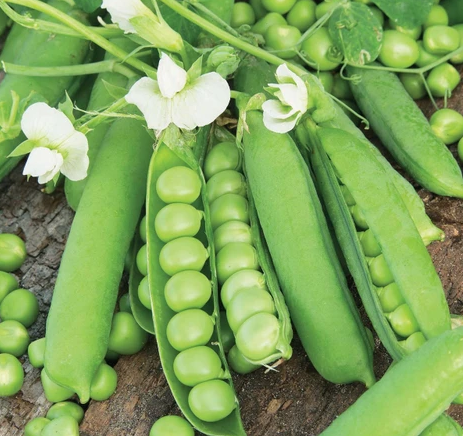
Peas grown for the fresh market are typically harvested by hand at the edible maturity stage. Pick them when the pods are 3½ to 4 inches long, and the peas inside have fully developed. For short-term storage, keep peas in cold storage at 32°F with 85–95% relative humidity, where they will remain fresh for 7–10 days.
There are no products listed under this category.