There are no products listed under this category.


Appearance is part of pumpkin quality. Rind color is primarily determined by the genetics and maturity characteristics of the variety. Once fruit begins developing its mature appearance, canopy condition, sunlight, weather, temperature, rind injury, handling, and storage conditions can influence how well that appearance is maintained through sale or display.
A pumpkin's appearance is not necessarily static from fruit set through storage. Rind color can change naturally as the fruit matures, while environmental exposure and postharvest conditions can cause additional changes. The first step is distinguishing normal cultivar development from actual rind injury or deterioration.
Each variety has an expected mature color and pattern. Some cultivars naturally change hue, background color, striping, or surface appearance as they mature.
Canopy loss, intense sunlight, wet conditions, and other environmental factors can affect rind appearance before harvest.
Temperature, humidity, ventilation, ethylene exposure, physical injury, and storage duration can influence appearance after harvest.
Not every color change means something is wrong. Some pumpkins naturally continue changing appearance as they mature. UC Davis, for example, identifies changes in rind color as one external indicator of maturity in some winter squash, including bright green changing to dull green in Kabocha types.
A gradual or relatively uniform color change that corresponds with the normal mature appearance of the cultivar may simply be part of fruit development.
Localized reddish, pale, bleached, water-soaked, sunken, softened, bruised, or damaged areas are more likely to indicate environmental or physical injury.
A healthy pumpkin canopy does more than support fruit growth. Leaves provide shade that helps protect developing fruit from intense direct sunlight. This becomes particularly important as pumpkins approach maturity and their marketable rind color develops.
When foliage declines from normal senescence, disease, insects, environmental stress, or other causes, previously shaded fruit can suddenly become exposed. University of Maryland Extension has documented sunburn and sunscald on exposed pumpkins, while Cornell reports that premature foliage loss can contribute to poor rind color and sunburn.
For pumpkins grown primarily for ornamental use, maintaining healthy foliage through fruit maturity can help protect both rind appearance and handle quality.
Pumpkins exposed to intense sunlight can develop sun injury, especially when foliage that previously shaded the fruit is lost. University of Maryland Extension reports that the sun-facing surface of orange pumpkins can develop reddish or white-bleached areas. Green fruit can also develop sun injury.
Cornell describes sunscald as beginning on exposed portions of the fruit, with affected rind eventually developing a bleached appearance. Severely injured tissue can later become an entry point for decay organisms.
Watch the canopy as closely as the pumpkin. A fruit that developed safely beneath foliage can become much more vulnerable once those leaves disappear.
Yes. Leaving pumpkins in the field is an important part of many U-pick operations. The challenge is that field conditions continue changing after the fruit reaches marketable maturity. Healthy foliage, weather, fruit maturity, field conditions, and whether pumpkins remain attached or have already been clipped all influence how well fruit holds.
Remaining foliage helps shade fruit and protects rind that developed beneath the canopy.
As leaves disappear, pumpkins receive more direct sunlight and become increasingly exposed to weather.
Fruit clipped ahead of customer harvest and left exposed can be especially vulnerable to sun injury during hot, clear weather.
University of Maryland Extension has specifically reported significant sunburn losses in U-pick pumpkin fields where reduced leaf cover left fruit exposed. Field holding should therefore be reevaluated as canopy protection declines or unfavorable weather develops.
There is no single calendar date that determines when field holding should end. Once fruit is mature, growers should consider canopy condition, fruit condition, expected weather, field history, and how long the pumpkins must remain marketable.
Consider removing mature fruit when:
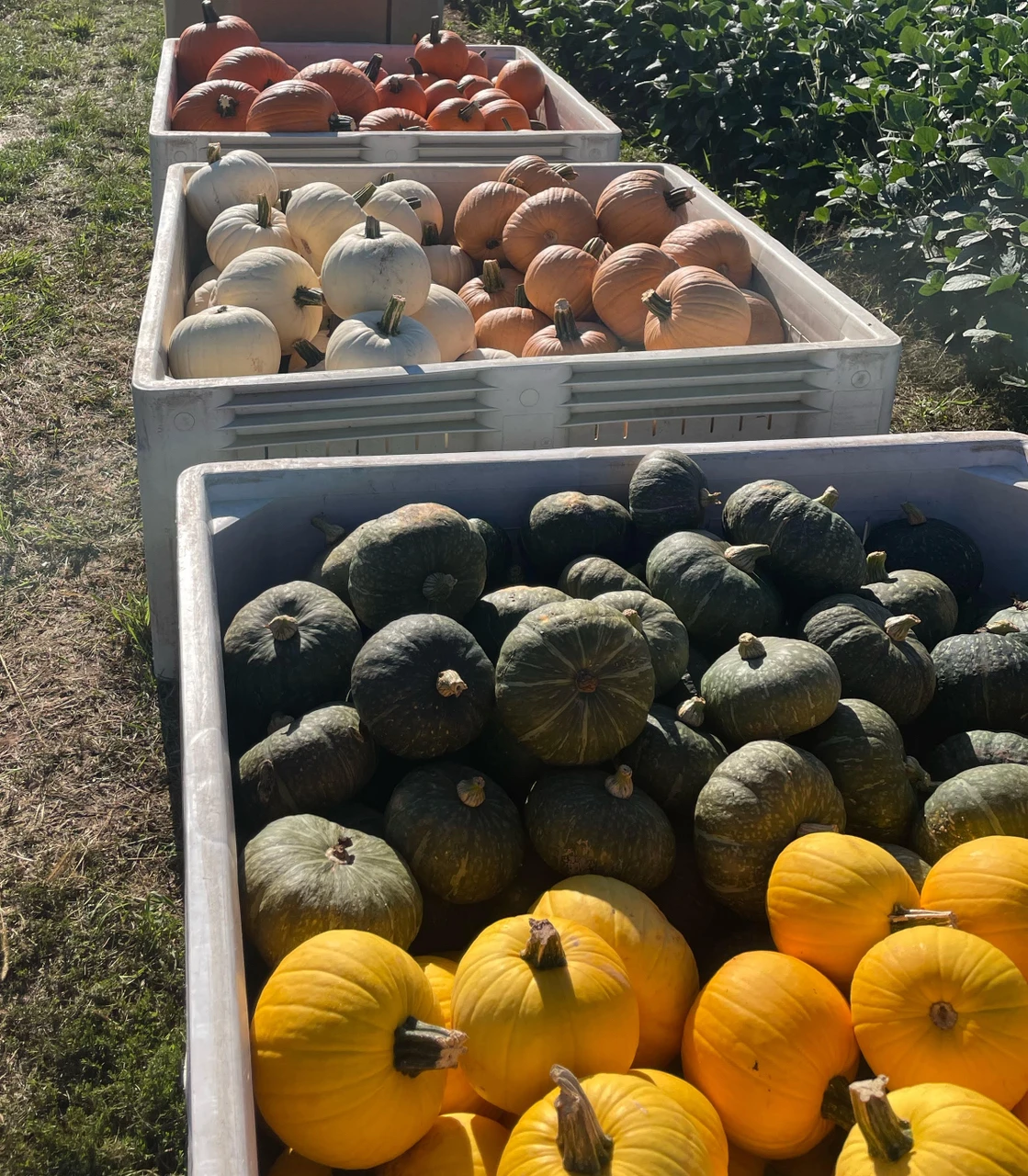
Harvest maturity is one of the most important factors affecting storage potential. Mature pumpkins should have good rind development and the color characteristic of the variety. Because modern pumpkins range from traditional orange to white, pink, blue-gray, green, yellow, striped, and mottled, maturity should not be judged by one universal color standard.
Look for the mature rind appearance expected for the individual variety.
A mature pumpkin develops a firm, well-developed rind that better withstands normal handling.
Stem maturation and corking provide another useful indication that fruit is approaching maturity.
Days to maturity are useful for estimating when to begin checking the crop, but field maturity should ultimately be evaluated from the fruit itself. Immature pumpkins generally lose more weight and experience more decay during storage than mature fruit.
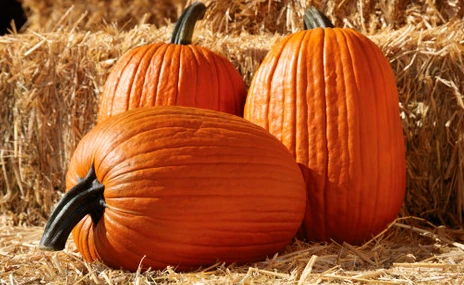
Traditional orange pumpkins can experience important changes in rind color and appearance before and after harvest. Mature fruit should develop the characteristic orange color expected for the variety, but genetics, maturity, canopy condition, sunlight, weather, rind injury, and storage conditions all influence final market appearance.
Sun injury is particularly important. Orange fruit that becomes exposed after canopy loss can develop reddish or bleached areas rather than maintaining an even, marketable orange rind.
Pumpkins that have already started developing mature color can continue to color after harvest when held under suitable conditions. This can be useful when fruit needs to be removed from the field because of declining foliage or unfavorable conditions.
However, this does not mean maturity at harvest is unimportant. Fully mature fruit generally has better storage potential than immature fruit, and very immature pumpkins should not be expected to perform exactly like fruit allowed to mature normally on the plant.
For U-pick and fall-market growers: Once orange pumpkins are mature, leaving them exposed in a declining canopy is not automatically an advantage. When sunscald or unfavorable field conditions become a greater risk, harvesting mature fruit may better protect market quality.
Specialty colors should not all be managed as though they respond identically. The variety's genetics determine its expected mature appearance, and different cultivars can behave differently during maturation and storage.
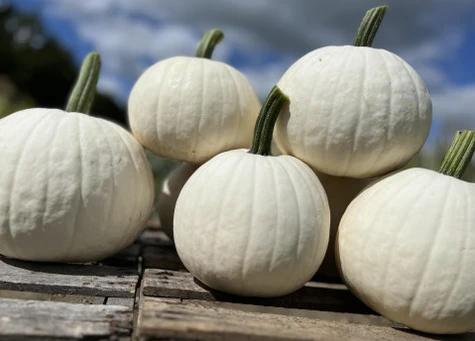
Changes in shade, soil staining, scuffs, bruises, and other surface damage are especially visible on pale fruit. Protect mature fruit from excessive sun exposure and unnecessary rind injury.
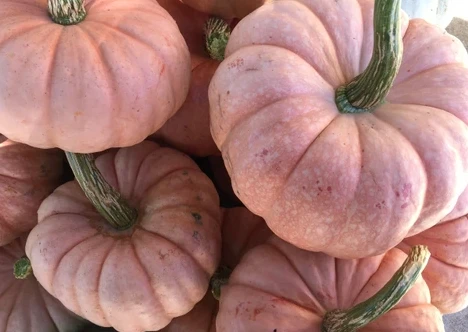
These colors occur across many genetically distinct cultivars. Judge normal color development against the expected mature appearance of the individual variety and protect fruit from sun injury and abrasion.
Green-rinded cucurbits can lose chlorophyll during storage, a process known as degreening. Temperature and ethylene exposure can influence undesirable yellowing in susceptible green-rinded types.
Harvest according to the expected mature appearance of the cultivar. Protect market-ready fruit from excessive sun exposure, heat, bruising, and rind abrasion.
Striping, mottling, and contrasting background colors are cultivar traits. Patterns and background colors can change naturally with maturity, so use the expected mature appearance of the individual variety rather than a generic color standard.
Green-rinded pumpkins and winter squash can undergo degreening, which occurs as green coloration is lost. UC Davis reports that storage around 59°F can promote undesirable yellowing and color loss in some green-rinded squash, while somewhat cooler conditions can help slow degreening.
Ethylene exposure can also promote degreening. This matters when green rind color is an important ornamental characteristic and pumpkins are stored near other produce.
There is a storage tradeoff. Cooler conditions can help retain green color in some cultivars, but pumpkins and winter squash are susceptible to chilling injury when temperatures become too low. Cultivar characteristics and intended storage duration should be considered together.
For ornamental pumpkins, the rind and stem are both part of the marketable product. Cuts, punctures, bruises, scuffs, and broken stems reduce visual quality and can create entry points for decay organisms.
Cut mature pumpkins from the vine rather than pulling or twisting them free. Leave an appropriate stem attached and handle pumpkins by supporting the fruit itself rather than using the stem as a carrying handle.
A good handle adds ornamental value, but it should not be used as a carrying handle.
Curing, sometimes described as hardening off, allows the rind to harden and can promote healing of minor surface injuries before longer storage. Traditional Extension recommendations commonly use warm conditions around 80–85°F with approximately 80–85% relative humidity for about 7–14 days when curing is needed.
UC Davis also notes that pumpkins can harden or cure in the field when protected from direct sunlight, such as beneath foliage. Recommended storage conditions can continue to favor rind hardening after harvest.
Curing does not mean leaving harvested pumpkins exposed in intense direct sun. Protect fruit from solar injury while the rind hardens.
Exact storage recommendations vary somewhat by source, cultivar, and intended storage period. Penn State recommends approximately 50–55°F with 50–70% relative humidity for commercial pumpkin storage. UC Davis gives an optimum of approximately 55–59°F with 50–70% relative humidity for pumpkins and winter squash generally.
A general range of approximately 50–60°F covers common Extension recommendations, although cultivar and storage objective matter.
Approximately 50–70% relative humidity balances water loss against the increased decay risk associated with excessive humidity.
Good air movement helps reduce condensation and creates a more uniform storage environment.
Penn State reports that pumpkins held under appropriate commercial storage conditions can retain good quality for approximately 2–3 months, although actual storage life varies with cultivar, maturity, handling, and fruit condition.
No. Pumpkins are sensitive to chilling injury.
UC Davis reports that pumpkins and winter squash are very sensitive to temperatures below approximately 50°F. Chilling injury can produce sunken surface pits and increase decay after fruit is returned to warmer conditions. Very cold storage should therefore not be used simply as a way to slow aging or color change.
Potentially. Some fruits and vegetables release the natural plant hormone ethylene as they ripen. UC Davis reports that ethylene exposure can promote degreening in green-rinded squash and can contribute to stem separation, especially in less mature fruit.
When retaining green rind color is important, avoid unnecessary exposure to strong ethylene-producing commodities during storage.
Maintain healthy canopy protection through maturity when possible.
Judge color, rind, and stem according to the individual cultivar.
Cut fruit carefully and avoid bruising, punctures, scuffs, and broken handles.
Cure when appropriate and protect harvested fruit from intense direct sunlight.
Control temperature, humidity, ventilation, and unnecessary ethylene exposure.
Preserving the appearance of both traditional orange and specialty pumpkins begins before harvest.
Know the mature appearance of the variety, maintain healthy foliage through maturity when possible, watch for increasing sun exposure as the canopy declines, harvest mature fruit carefully, protect the rind and handle, and use appropriate curing and storage conditions. Traditional orange pumpkins can suffer sun injury, rind damage, and postharvest deterioration just as specialty pumpkins can. White, blue-gray, green, yellow, pink, striped, and mottled varieties may also undergo cultivar-specific color changes that growers should recognize rather than automatically interpreting every change as a problem.
There are no products listed under this category.