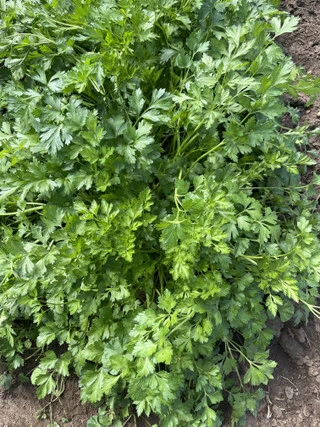
There are no products listed under this category.


Parsley thrives in air temperatures between 60°F–65°F. Soil temperature should be at least 50°F for planting.
Parsley prefers rich, moist soil with good drainage and a pH between 5.3 and 7.3. Cover seeds no deeper than 1/4 inch. If using heavy-textured soils, cover seeds with leaf mold, sand, or peat to prevent crusting.
Plant seeds as soon as the soil can be worked in the spring. In northern regions, start seeds indoors for better results and transplant them once the danger of frost has passed.
Parsley harvesting is labor-intensive, typically done by hand to minimize crop damage.
Workers can group plants, slice the stalks with a knife, and bundle them with a rubber band for bunching. For continuous harvest, cut parsley 1 to 1 1/4 inches above the crown for multiple cuttings. For machine harvesting, cut 1 to 3 inches above the crown. Parsley can be harvested multiple times depending on crop quality. In the North, sowing three times per year allows continuous harvesting from April to December. In the South, parsley is sown in late summer and fall for winter harvest. Hamburg parsley is hardy and can withstand mild freezes. The roots may be left in the ground or stored in trenches or root cellars. To improve freeze tolerance, hay can be spread over the crop in the field. After harvest, parsley roots should be washed, and discolored leaves removed before marketing.
There are no products listed under this category.