


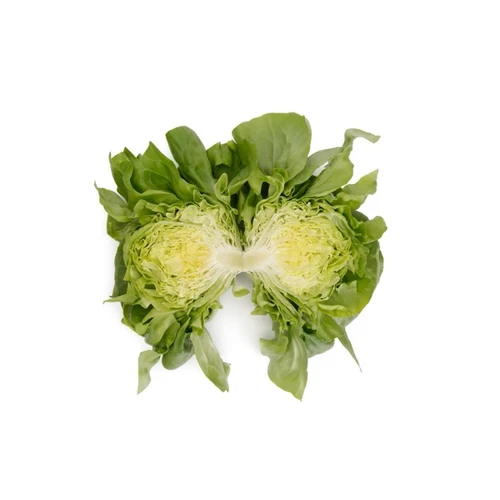


Type: Open Pollinated / Heirloom
Class: Butterhead
Relative Days: 55
Life Cycle: Annual
Characteristics:
Lettuce (Lactuca sativa)
Lettuce is hardy and can be planted as early as the soil can be worked.
Temperature
A cool-weather crop, it thrives at temperatures between 60–65°F. Daytime temperatures should range from 68 to 75°F and never exceed 77°F, while nighttime temperatures should remain between 60 and 65°F.
Soil
Lettuce can grow in most soil types, but it thrives in moisture-retaining soil enriched with rich compost.
Planting
To ensure a continuous supply of fresh lettuce, sow seeds every 3 weeks.
Transplanting: Sow in flats at 4 seeds per inch, or in 3/4" plug trays, barely covering the seeds with fine vermiculite. Start 3–4 weeks before transplanting outdoors. On sunny, warm days, shade the flats if necessary to maintain a soil temperature below 75°F until germination. If sowing in flats, transplant seedlings 1-2 inches apart into flats, pots, or cell containers about 2 weeks later. Harden the seedlings by reducing water and temperature for 2–3 days before transplanting outdoors. Properly hardened transplants can tolerate temperatures as low as 20°F.
For iceberg and romaine lettuce, transplant 10–12 inches apart in rows 18 inches apart. For other types, space plants 8–10 inches apart in rows 12–18 inches apart for full-size heads or 6 inches apart for mini heads.
Direct Seeding: Lettuce seeds can germinate at low soil temperatures, as low as 40°F, but germinate poorly above 75°F, depending on the variety and seed lot. Sow seeds at 6 seeds per foot, in rows 12–18 inches apart. Lightly cover seeds with about 1/8-inch of soil and gently firm the soil. Thin iceberg and romaine lettuce to one plant every 10–12 inches, and other types to 8–10 inches for full-size heads or 6 inches for mini heads. To ensure coolness and moisture for uniform germination, water dry soil thoroughly.
Spacing
6-15” distance in row and 12-24” between rows
Harvest
To harvest lettuce, pull up the entire plant and use a sharp knife to trim off the roots. Always harvest in the morning, when the leaves are cool and full of moisture. For head lettuce, harvest before the plants begin to elongate, as they lose their delicate flavor when they start preparing to flower and set seed.
The timing of harvest depends on the type of lettuce and the intended product. Head-forming lettuces should be harvested when a head starts to form and the plants reach a sufficient size, typically between 150 g (~5 oz.) and 250 g (~9 oz.). When harvesting lettuce heads, the root system can be left intact to create "living lettuce," which can extend postharvest shelf life. Non-head lettuces are usually harvested as loose leaves, and multiple varieties can be blended into a mix. Other greens, such as kale, spinach, and some chard cultivars, are often sold as bunches, where multiple plants are grouped together to form a saleable-sized bundle.
Head lettuce and loose leaves can be sold in clamshell containers or plastic bags, while bunches of greens may be sold as-is or placed in a plastic bag.
For more information, please see links below:
Downloadable Copy:
Please click here to download a printable version.